
Replacing an automatic bean-to-cup coffee machine in a Hong Kong office
Take the drink counts and favourite recipes from your current machine. Use them to tell a commercial supplier exactly what the replacement needs to do.
Take a week of drink counts from the old machine
Photograph the drink counters before the first coffee on Monday and after the last coffee on Friday. Subtract the opening count for each drink. If you can’t access the counters, leave a tally sheet beside the machine for the same five days. Give your supplier the busiest day as well as the weekly total.
Say the team made 140 black coffees, 75 milk coffees and 20 cups of hot water. That’s 43 coffees per working day on average. Keep the hot water on a separate line. Those 20 cups used no beans, but they still occupied the dispenser. Tell the supplier if people also queued for hot water while colleagues ordered lattes.
Show the supplier what a busy ten minutes looks like
An hourly espresso rating describes one drink at one size. For example, the CaféMatic 1 lists 70 espressos an hour at 50 mL each. Your 250 mL Americanos and milk drinks take a different sequence. A machine can cover your day’s total and still keep a meeting host waiting.
Give the supplier the order from your busiest break. For six lattes, four Americanos and two hot waters in ten minutes, you need a finished drink every 50 seconds on average. Ask for a demo with your cup sizes and the quoted milk system. Start the timer when the first colleague selects a drink and stop when the twelfth cup leaves the tray. If you miss ten minutes, note what held up the line. A separate hot water dispenser may solve a queue that a faster grinder won’t.
Give the new machine a recipe worth keeping
Pick the drink colleagues would miss most. Before the old machine goes, record the beans, the milk, the usual cup and its fill level. For a long black coffee, note whether the machine adds hot water after brewing or runs all the water through the grounds. Two cups filled to the same line can taste quite different.
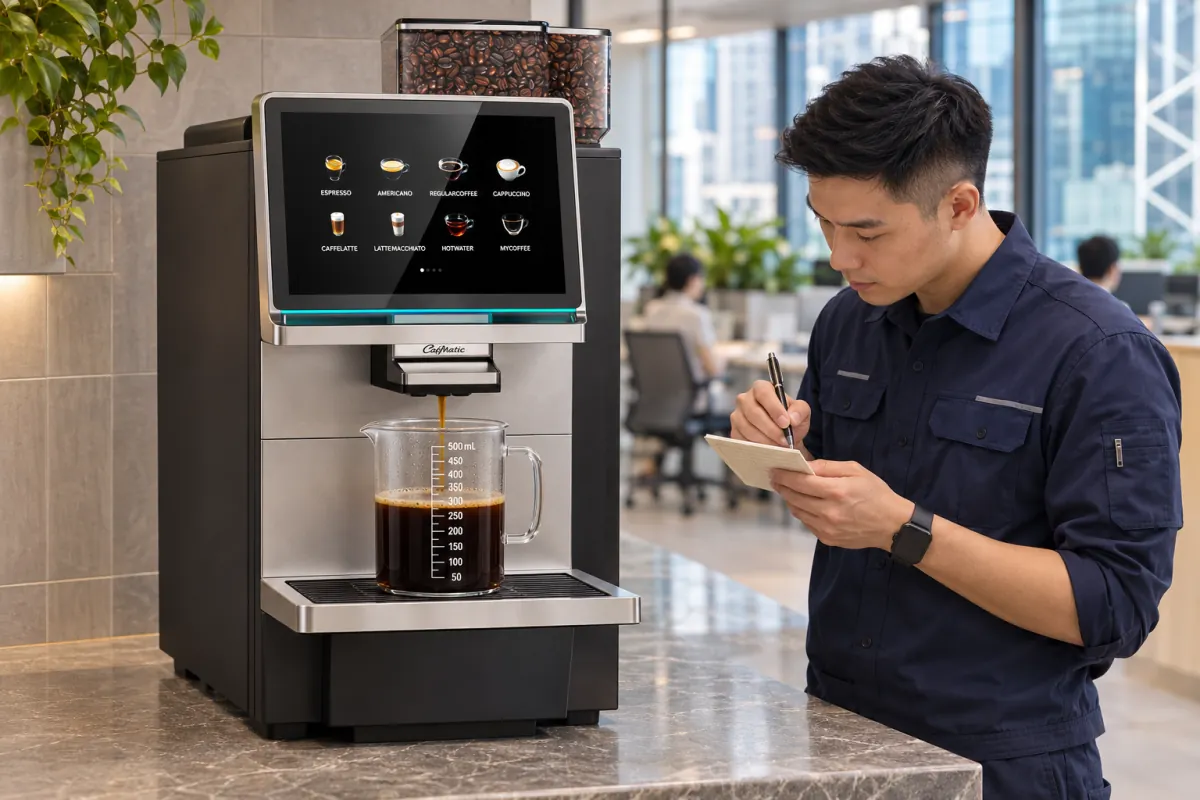
Bring the beans and cups to the trial. Ask the supplier to set the new machine to your usual serving size, then have a regular drinker try it. If it tastes too weak, adjust the coffee dose or water volume with the demonstrator and try it again. Once it tastes right, save the recipe and have another colleague order it from the welcome screen. Put that recipe, cup size and any required milk fridge on the handover sheet so the installer can reproduce the drink your team approved.